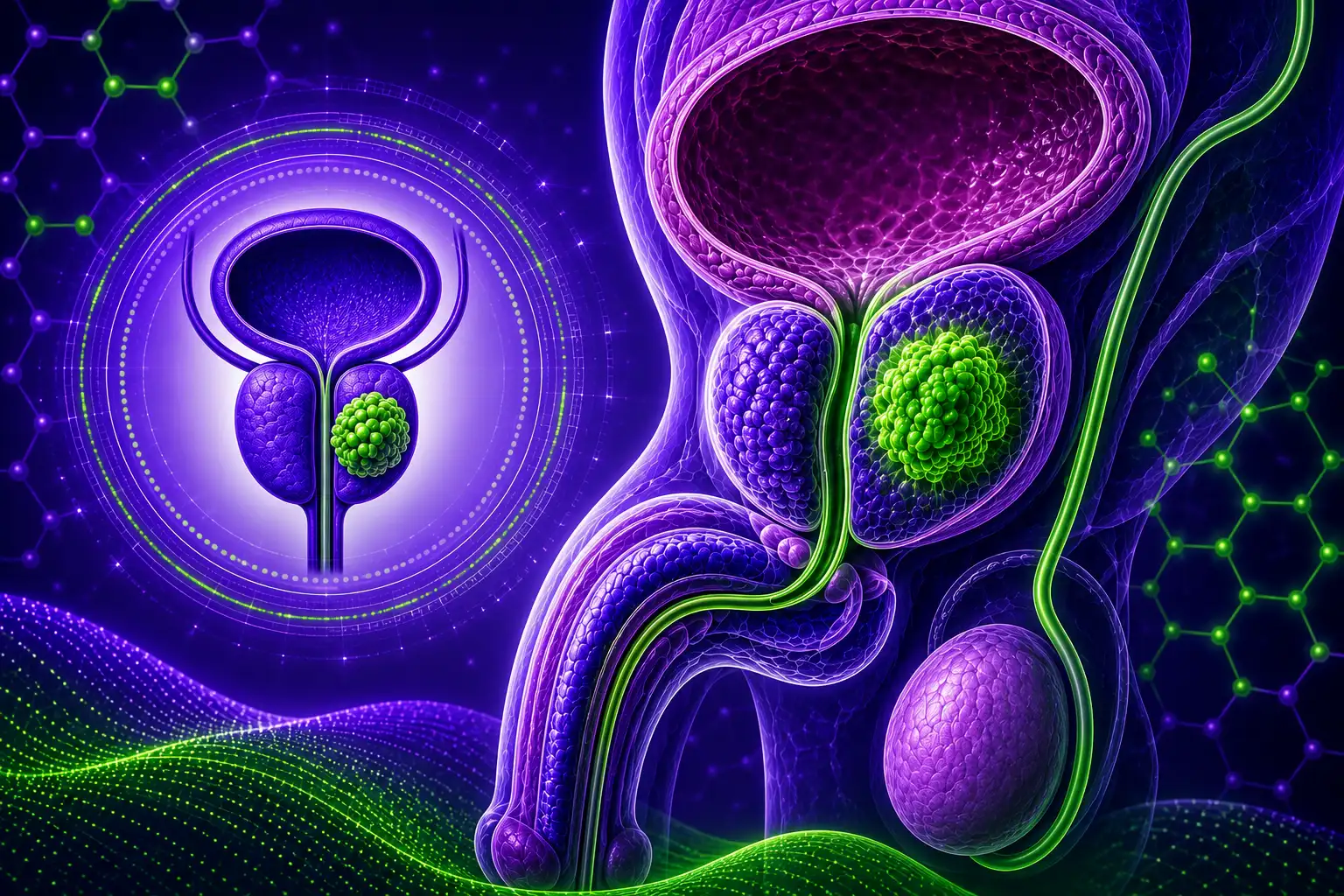
Prostate cancer develops when abnormal cells grow uncontrollably in the prostate gland, an important part of the male reproductive system responsible for producing seminal fluid. Comprehensive genomic profiling helps identify actionable biomarkers, enabling personalized treatment decisions and improving patient outcomes.
Prostate cancer develops when abnormal cells grow uncontrollably in the prostate gland, a small organ in the male reproductive system responsible for producing the fluid component of semen.
Early detection together with precision oncology and genomic profiling helps identify personalized treatment strategies and improves long-term clinical outcomes.
Accurate diagnosis combined with genomic profiling helps determine the stage of prostate cancer and supports personalized treatment planning for improved clinical outcomes.
Measures Prostate-Specific Antigen (PSA) levels in the blood to help detect prostate abnormalities.
Digital rectal examination together with ultrasound, CT, MRI, or PET scans helps assess the prostate and detect tumour spread.
A prostate tissue sample is examined under the microscope to confirm cancer and guide treatment decisions.
Surgical removal of the prostate gland to eliminate localized cancer.
Extreme heat or cold destroys prostate cancer cells while preserving surrounding healthy tissue.
Anti-cancer medicines help destroy rapidly growing prostate cancer cells.
High-energy radiation targets and destroys prostate cancer cells.
Precision medicines target specific genetic alterations involved in tumour growth.
Enhances the immune system's ability to recognize and destroy cancer cells.
Lowers or blocks testosterone to slow the growth of prostate cancer cells.
Radioactive medicines specifically target and destroy prostate cancer cells.
Prognosis depends on the stage of disease, overall health, treatment response, and timely diagnosis. Early-stage prostate cancer has excellent survival outcomes when appropriately treated.
According to the Malaysian Study on Cancer Survival (MySCan).
Survival rates by cancer stage.
| Stage I | 97.3% |
|---|---|
| Stage II | 92.1% |
| Stage III | 93.0% |
| Stage IV | 43.2% |
Explore comprehensive molecular diagnostics and genomic profiling to support accurate diagnosis, prognosis, targeted therapy selection, and personalized treatment planning for prostate cancer.