Nasopharyngeal Cancer

Precision Oncology for Nasopharyngeal Cancer

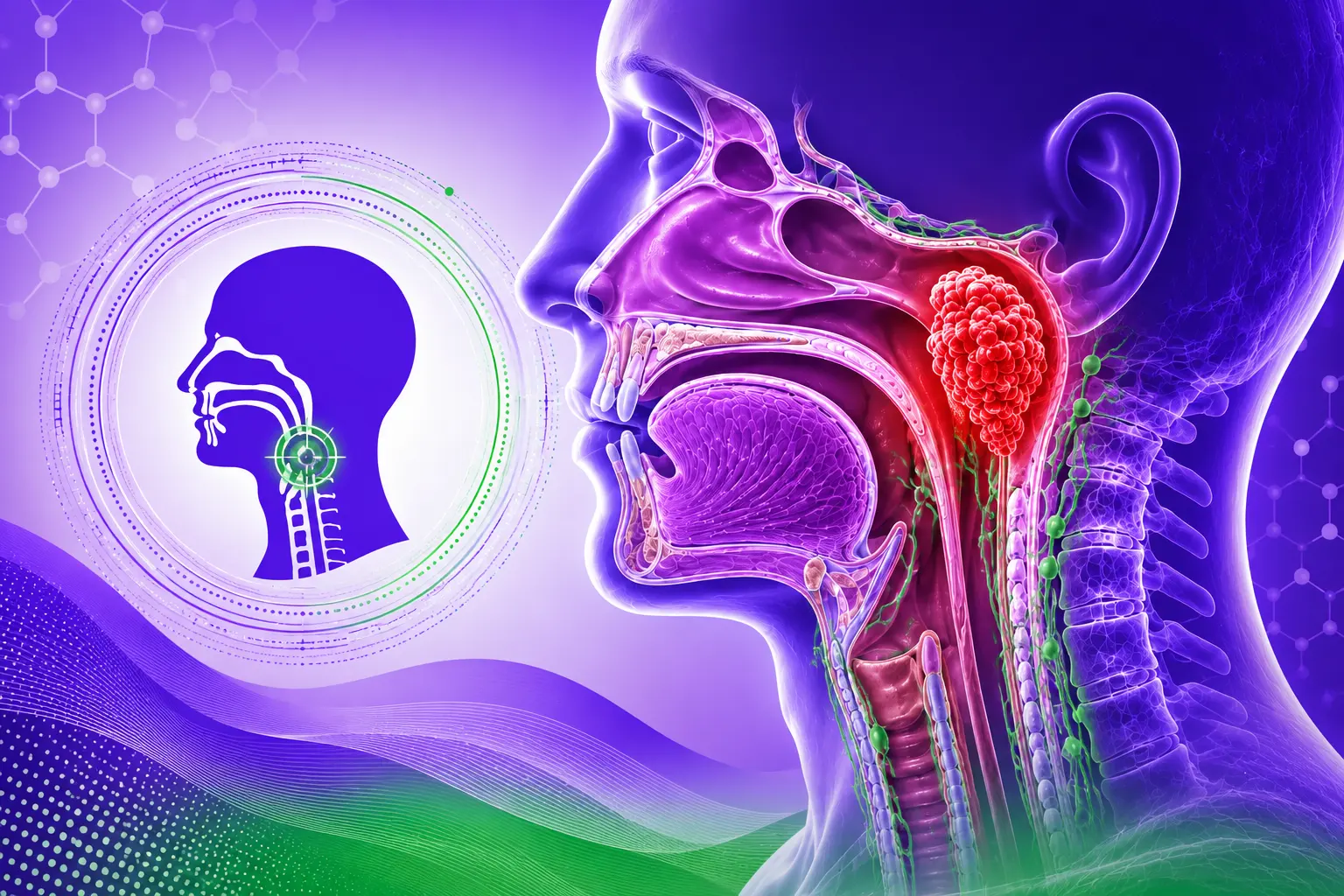
Nasopharyngeal cancer develops when abnormal cells grow in the nasopharynx, the upper part of the throat located behind the nose. Precision oncology and comprehensive genomic profiling help identify molecular alterations, enabling personalized treatment strategies and improved clinical outcomes.

Early Detection
Precision Medicine
Better Outcomes
Nasopharyngeal Cancer

What is Nasopharyngeal Cancer?

Nasopharyngeal cancer is a malignancy that begins in the nasopharynx, the upper part of the throat connecting the back of the nose to the back of the mouth.

Although relatively uncommon, early diagnosis together with precision oncology and molecular profiling helps identify targeted treatment options and improves patient outcomes.

Develops in the nasopharynx
Often associated with Epstein-Barr Virus (EBV)
Early diagnosis improves survival

Symptoms

  • Lump in the neck
  • Hearing loss
  • Tinnitus (ringing in the ears)
  • Blocked or stuffy nose
  • Nosebleeds
  • Headaches
  • Double vision
  • Facial pain or numbness
  • Difficulty swallowing
  • Hoarse voice

Risk Factors

  • Heavy tobacco use
  • High alcohol consumption
  • Epstein-Barr Virus (EBV) infection
  • Diets rich in salt-cured foods
  • Exposure to formaldehyde
  • Family history of nasopharyngeal cancer

Diagnosis and Treatment Options

Early and accurate diagnosis helps determine the stage of disease and supports personalized treatment planning.

Diagnosis

1
Endoscopy

Nasendoscopy or panendoscopy is performed using a flexible camera to examine the nasopharynx and surrounding structures.

2
Imaging

CT scan, MRI or PET scan helps determine tumour size and disease spread.

3
Biopsy

A tissue sample confirms the diagnosis and supports molecular testing for treatment selection.

Treatment Options

Chemotherapy

Medicines destroy rapidly growing cancer cells.

Radiotherapy

High-energy radiation targets cancer cells.

Targeted Therapy

Precision medicines target specific genetic abnormalities within tumour cells.

Survival Outcomes

Survival depends on the stage of disease, treatment response, and early diagnosis.

Overall Survival

Based on 134 patients treated at Hospital Universiti Sains Malaysia.

38.0%

5-Year Survival Rate

5-Year Survival by Stage

Based on 266 cases treated at Subang Jaya Medical Centre (SJMC) between 2008 and 2012.

Stage I 100%
Stage II 91%
Stage III 72%
Stage IV 44%

Frequently Asked Questions

Stage 0: Cancer is limited to the top layer of cells.

Stage I: Cancer has spread within the nasopharynx and nearby areas.

Stage II: Cancer involves one or more lymph nodes on one side of the neck.

Stage III: Cancer affects lymph nodes on both sides of the neck.

Stage IV: Cancer has spread to distant organs such as the lungs, skull, or eyes.

• Keratinising squamous cell carcinoma (WHO Type I)

• Non-keratinising carcinoma (WHO Type II)

• Non-keratinising undifferentiated carcinoma (WHO Type III)

Many early-stage nasopharyngeal cancers can be successfully treated with radiotherapy and chemotherapy. Advanced disease is more challenging but can often be managed with modern treatment approaches.

Recommended Tests


Need Precision Oncology Testing?

Explore advanced genomic profiling and molecular diagnostics to support accurate diagnosis, targeted therapy selection, treatment monitoring, and personalized care for nasopharyngeal cancer.