Lung Cancer

Precision Oncology for Lung Cancer

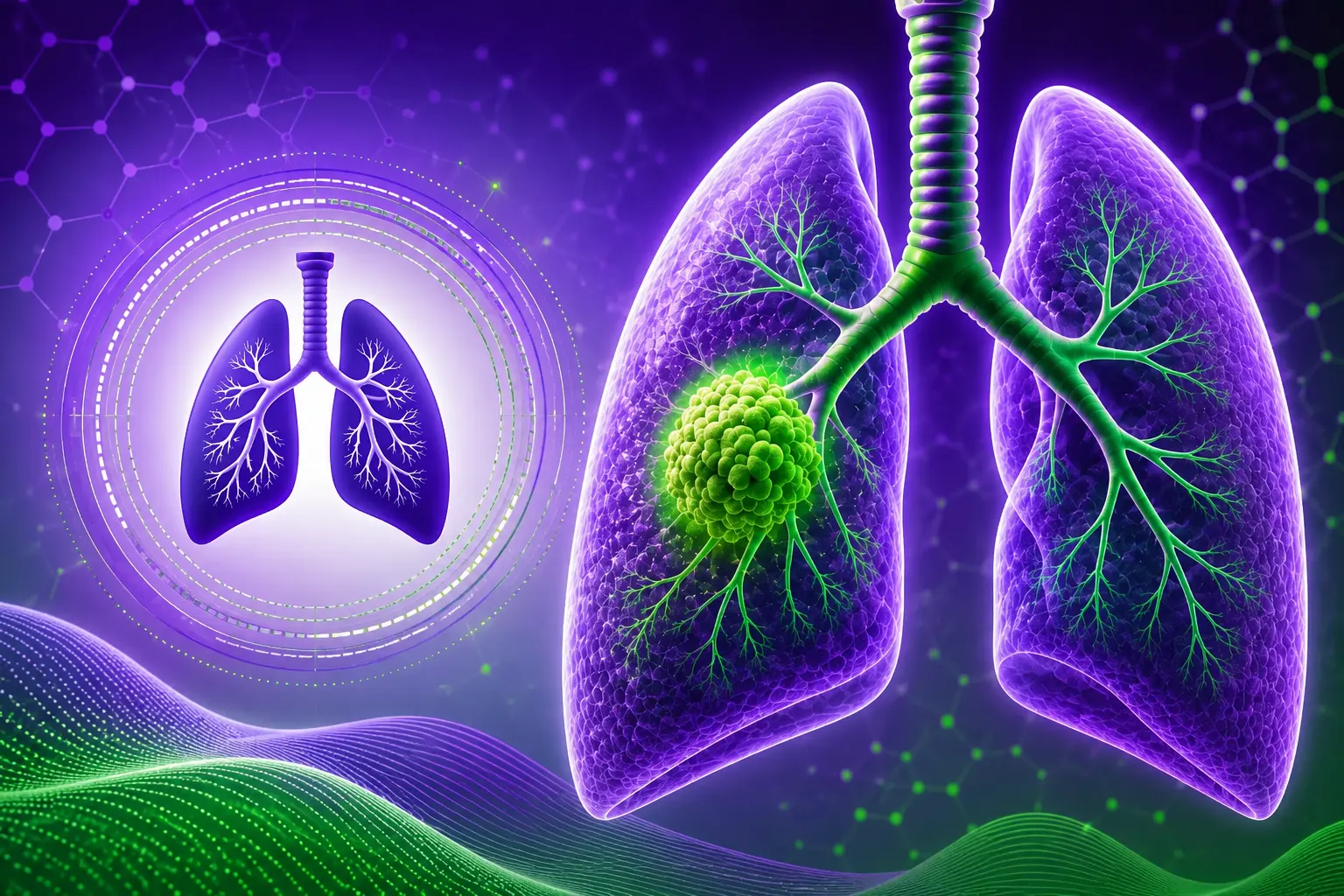
Lung cancer is the abnormal growth of cells in the lungs, usually beginning in the airways or tiny air sacs (alveoli). Early diagnosis and genomic profiling help guide personalized treatment decisions and improve clinical outcomes.

Early Detection
Precision Medicine
Better Outcomes
Breast Cancer

What is Lung Cancer?

Lung cancer is the abnormal growth of cells in the lungs. It most commonly starts in the airways or the tiny air sacs (alveoli) responsible for oxygen exchange.

Early detection and comprehensive genomic testing enable personalized treatment strategies and improve patient outcomes.

Starts in the lungs
Often has few early symptoms
Early diagnosis improves survival

Symptoms

  • Persistent cough
  • Shortness of breath
  • Wheezing
  • Chest pain
  • Coughing up blood
  • Unexplained weight loss

Risk Factors

  • Smoking
  • Second-hand smoke
  • Radon exposure
  • Air pollution

Diagnosis and Treatment Options

Early diagnosis and molecular profiling enable personalized treatment strategies for lung cancer.

Diagnosis

1
CT Scan / MRI

Advanced imaging to identify suspicious lung lesions.

2
Biopsy

Tissue sample collected for laboratory confirmation.

3
Genomic Profiling

Detects actionable mutations for targeted therapy.

Treatment Options

Surgery

Thoracotomy – Open chest surgery to remove the tumour or part of the lung.

Video-Assisted Thoracoscopic Surgery (VATS) – Minimally invasive removal using small incisions.

Radiotherapy

High-energy radiation used before or after surgery.

Chemotherapy

Drug therapy to shrink tumours or reduce recurrence.

RFA

Radiofrequency ablation destroys cancer cells using heat.

Targeted Therapy

Precision medicines targeting specific mutations.

Immunotherapy

Stimulates the immune system to recognize and destroy cancer cells.

Survival Outcomes

Survival depends largely on the stage at diagnosis. Earlier detection generally results in better treatment outcomes.

Survival Rate After Surgical Treatment
Time Thoracotomy VATS Overall
1 Year 91.7% 96.4% 94%
2 Years 72.7% 85.3% 78%
3 Years 50.0% 71.4% 57%

Frequently Asked Questions

Stage 0: Cancer remains within the airways.
Stage I–III: Cancer is confined to the lungs but increases in size.
Stage IV: Cancer has spread beyond the lungs to distant organs.

Yes. Lung cancer can occur in non-smokers due to second-hand smoke, radon exposure, air pollution, occupational hazards, and inherited genetic changes.

Individuals at high risk—especially long-term smokers or former smokers—should discuss low-dose CT screening with their healthcare provider.
Need Precision Oncology Testing?

Discover comprehensive molecular profiling and genomic testing to support personalized treatment decisions for lung cancer.